




As demand for veterinary specialists continues to rise across the United States, compensation structures are becoming increasingly important when evaluating career opportunities.
For many board-certified specialists and residency-trained veterinarians, compensation discussions often go far beyond a simple base salary.
Today, many referral hospitals and specialty practices offer a variety of compensation models designed to attract and retain top talent.
Two of the most common structures are:
Understanding the difference between these models, and how they can impact income, workload, work-life balance, and long-term career satisfaction, is critical for veterinary specialists evaluating opportunities in today’s market.
The demand for veterinary specialists has grown significantly over the past decade.
Referral hospitals, emergency centers, and specialty practices across the United States continue competing for a limited pool of board-certified talent in areas such as:
According to workforce data from the American Association of Veterinary Medical Colleges (AAVMC), demand for veterinary services is expected to remain strong through the coming decade. At the same time, the pipeline of specialists entering the workforce remains relatively limited due to the extensive training required beyond veterinary school. (aavmc.org)
As hospitals compete more aggressively for specialists, compensation packages have become more complex and more negotiable than ever before.
A straight salary model provides a veterinary specialist with a fixed annual income regardless of production volume.
For example:
This structure provides predictability and financial stability, which many specialists value, particularly:
Some advantages include:
Straight salary models can also support collaborative hospital cultures by reducing internal competition around caseload allocation.
However, straight salary structures may also have limitations.
Highly productive specialists may feel their earning potential is capped, particularly in high-volume referral centers where revenue generation can be substantial.
In some cases, specialists producing significantly above expectations may eventually seek compensation structures that better reward productivity.
Production compensation ties earnings directly to the revenue a specialist generates.
Under this model, a veterinary specialist typically receives:
The percentage structure varies widely between hospitals and organizations.
Production is commonly calculated using:
A boarded internist may receive:
If caseload and revenue increase significantly, total compensation can rise substantially beyond the guaranteed base salary.
Production-based compensation can offer significant upside for specialists practicing in:
For highly productive clinicians, production structures may provide:
In some specialty markets, experienced specialists operating under production models may earn substantially more than fixed salary counterparts.
While production models can be financially rewarding, they can also introduce challenges.
In some environments, heavy production emphasis may contribute to:
Production-based systems may also vary significantly between hospitals, making contract review especially important.
Questions specialists should ask include:
Without clarity, compensation structures can become confusing or misleading.
One increasingly common model in specialty veterinary medicine is ProSal.
ProSal combines:
Under ProSal:
Many hospitals favor this structure because it balances:
However, ProSal structures can differ dramatically between organizations, making detailed contract review essential.
While salary and production percentages are important, compensation should never be evaluated in isolation.
Veterinary specialists should also consider:
A higher compensation package does not always translate to a better long-term fit.
In today’s veterinary market, many specialists are prioritizing:
just as much as total earning potential.
Because specialist demand remains extremely high, many hospitals are becoming more flexible and creative with compensation packages.
Competitive offers may now include:
Hospitals that fail to adapt to specialist expectations often struggle to recruit and retain talent in today’s competitive market.
There is no universally “best” compensation model for veterinary specialists.
Some clinicians thrive under production-based systems with high earning potential, while others prioritize predictability, flexibility, and long-term sustainability through straight salary structures.
The right compensation model depends on:
For veterinary specialists evaluating opportunities in today’s U.S. market, understanding how compensation works, and asking the right questions, is more important than ever.
At Global Talent Partners, we work closely with boarded specialists, residency-trained clinicians, and referral hospitals across the United States to help navigate career opportunities, compensation structures, and long-term professional goals.
If you would like to have a confidential conversation about the specialist veterinary market, compensation trends, or current opportunities, contact Gemma today:
US: (315) 234 0234,
UK: +44 7862 133 0818,
Email: [email protected]
Browse all our Specialist Veterinarian jobs by state
For more insights and information, speak to a member of our specialist team.
Relocation can open the door to exceptional opportunities, if it’s done strategically. With the right preparation and expert guidance, your move can elevate both your professional development and quality of life.
At Global Talent Partners, we combine deep industry knowledge, international networks, and personalized support to help specialist veterinarians relocate with confidence.
Let us guide you to the right opportunity, in the right place, at the right time.
Ready to Explore Your Next Move? Contact Gemma today for a confidential conversation about your relocation and career goals.
US: (315) 234 0234,
UK: +44 7862 133 0818,
Email: [email protected]
For more insights and information, speak to a member of our specialist team.
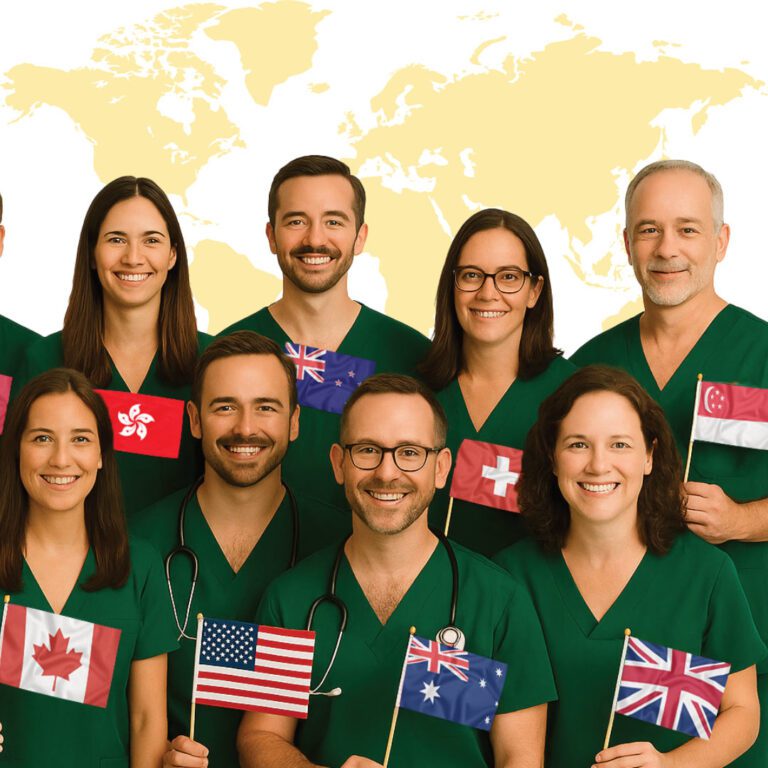
In today’s global veterinary landscape, opportunities for specialist veterinarians extend far beyond borders. Whether you’re an internal medicine specialist exploring a new challenge abroad, an ECC clinician seeking access to advanced facilities, or a surgeon ready to expand your professional horizons, international relocation can open the door to career-defining experiences.
At Global Talent Partners, our Specialist Vets Division works with leading referral hospitals and specialist practices across the UK, US, Europe, Australia, and beyond. We help veterinary specialists identify, evaluate, and secure positions that not only align with their expertise but also support their long-term career ambitions and personal goals.

3625 Commonwealth Ave, Charlotte,
NC 28205