




For Canadian audiologists considering opportunities in the United States, one of the biggest surprises is how differently the hearing healthcare market is structured.
In Canada, audiologists are generally the primary providers across both diagnostic and hearing aid services. In the U.S., however, hearing healthcare is often divided between two separate professions: audiologists and hearing aid specialists, also known in some states as hearing instrument specialists.
Understanding that distinction is important because, for some Canadian professionals, pursuing hearing aid specialist opportunities may offer a more accessible route into the U.S. market compared to the traditional audiologist pathway.
For Canadian-trained audiologists, relocating to the U.S. as a fully licensed audiologist can involve additional steps that many professionals are not initially aware of.
Most U.S. audiologists complete an Au.D. (Doctor of Audiology), while many Canadian professionals qualify through MSc or MClSc programs. Depending on the state, Canadian audiologists may also need credential evaluations, additional licensing documentation, Praxis exam requirements, or educational equivalency reviews before practicing clinically in the U.S.
We covered those licensing and relocation requirements in more detail in our separate relocation blog on our website, but the important thing to understand is that the process can be time consuming and differs significantly from state to state.
Because of this, some Canadian professionals begin exploring alternative pathways into the U.S. hearing healthcare market.
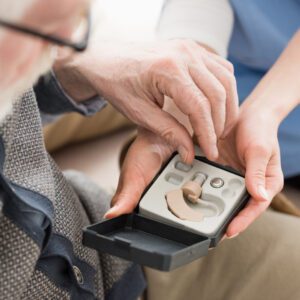
In the United States, hearing aid specialists focus primarily on hearing aid technology, patient support, and hearing device services.
Their responsibilities often include:
Unlike audiologists, hearing aid specialists are generally not responsible for diagnosing hearing or balance disorders, managing vestibular conditions, or conducting more advanced medical assessments.
However, in many private practice and retail hearing care environments, hearing aid specialists still play a major role in patient care and day-to-day clinic operations.
For some Canadian audiologists, hearing aid specialist opportunities can represent a more practical entry point into the U.S. market.
The educational and licensing pathway for hearing aid specialists is often shorter and less complex than the pathway required for full audiologist licensure in the U.S. Depending on the state, licensing may involve exams, apprenticeships, or state-specific requirements, but it can still be considerably more accessible than completing the full audiology equivalency process.
That does not necessarily mean becoming a hearing aid specialist is “better” than becoming licensed as an audiologist in the U.S. Instead, it may simply offer an alternative route for professionals who:
For professionals already experienced in patient care, amplification, and hearing technology, many of the day-to-day responsibilities may feel familiar, even though the official scope of practice is different.
Another major difference in the U.S. market is how compensation structures work.
Audiologists working in hospitals or healthcare systems often follow more traditional clinical salary models. Meanwhile, hearing aid specialists working in private practice or retail environments may have compensation tied more closely to commission structures, performance incentives, or clinic revenue.
Because of this, some hearing aid specialists can earn highly competitive incomes depending on the setting and business model.
The U.S. hearing healthcare market also tends to offer more flexibility across:
For Canadian professionals used to a more clinically centered system, this can open up career pathways that may not be as common in Canada.
For Canadian audiologists interested in working in the United States, there is no single correct route into the market. Some professionals choose to pursue full U.S. audiology licensure, while others explore hearing aid specialist opportunities as a way to enter the industry, gain U.S. experience, or transition into a different type of hearing healthcare role.
As the hearing healthcare industry continues to evolve across North America, understanding the differences between these career paths is becoming increasingly important for professionals considering cross-border opportunities.
At Global Talent Partners, we work closely with audiologists, hearing aid specialists, and hearing healthcare employers across the U.S. and Canada, helping professionals better understand market opportunities, career pathways, and hiring trends across an increasingly diverse hearing healthcare landscape.
Our audiology recruitment specialists at Global Talent Partners work one-on-one with new to match them with clinics, hospitals, and organizations where they can grow, learn, and truly feel part of the team.
Call us at (813) 776 1333
Email: [email protected]
For more insights and information, speak to a member of our specialist team.
How to build a strong audiology job application with support from Global Talent Partners


3625 Commonwealth Ave, Charlotte,
NC 28205